
Lidar trailers are a thing of the past—now we're going for the containers
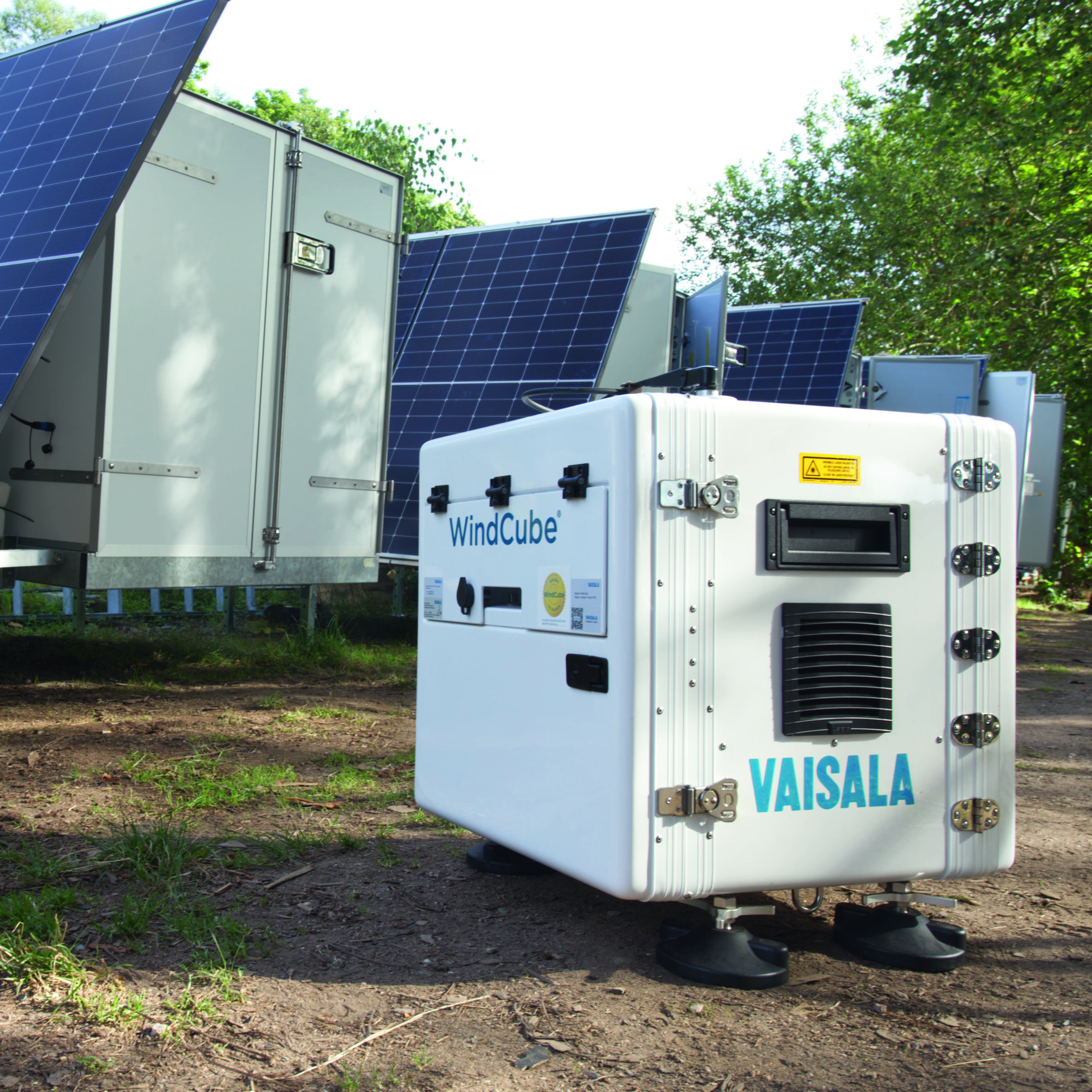
The LIDAR-CON is our enhanced version of the Lidar trailer, offering numerous advantages. It is based on a JOWA-CON container. The interior layout, attachments, and roof hatch are optimized for your Lidar wind measurement. This smart design is the result of 13 years of experience in building trailers for Lidar wind measurement equipment. And we are very proud of this design:
This well-designed swap body trailer combines ease of handling on the road with the flexibility, stability, and safety required at wind measurement sites. Once at the site, a securely anchored container remains in place to protect your lidar from external influences and provide a reliable power supply.
The platform trailer is freed up again and can be used for other tasks or additional LIDAR-CON units during the measurement. A nice bonus: TÜV inspections and maintenance can be carried out independently of the wind measurement, and even with multiple measurement sites, you only pay for registration and insurance for ONE trailer.
Advantages of our lidar container compared to a lidar trailer
- Greater measurement stability thanks to maximum lowering, balanced weight distribution, and generously sized supports. This makes your data collection even more reliable.
- More flexibility in the field: For the “last mile,” the container can also be rotated (90°/180°) on the trailer or even transported using a front loader.
- Lower operating costs, since only one trailer is needed for any number of containers, and it does not have to remain at the testing site (advantages also apply to registration, insurance, maintenance, and vehicle inspection)
- Due to the materials used, the container is much more durable and long-lasting when left outdoors: it is made exclusively of aluminum and stainless steel. You don’t have to worry about fungal growth, swelling plywood, or stuck brakes—problems that are common with trailers when left outdoors for extended periods.
- Can be positioned on slopes and uneven ground: The LIDAR-CON’s supports can compensate for a height difference of 35 inches/88 cm.
Interior
The interior design of the LIDAR-CON is optimized for ease of maintenance and reliable wind measurement operation.
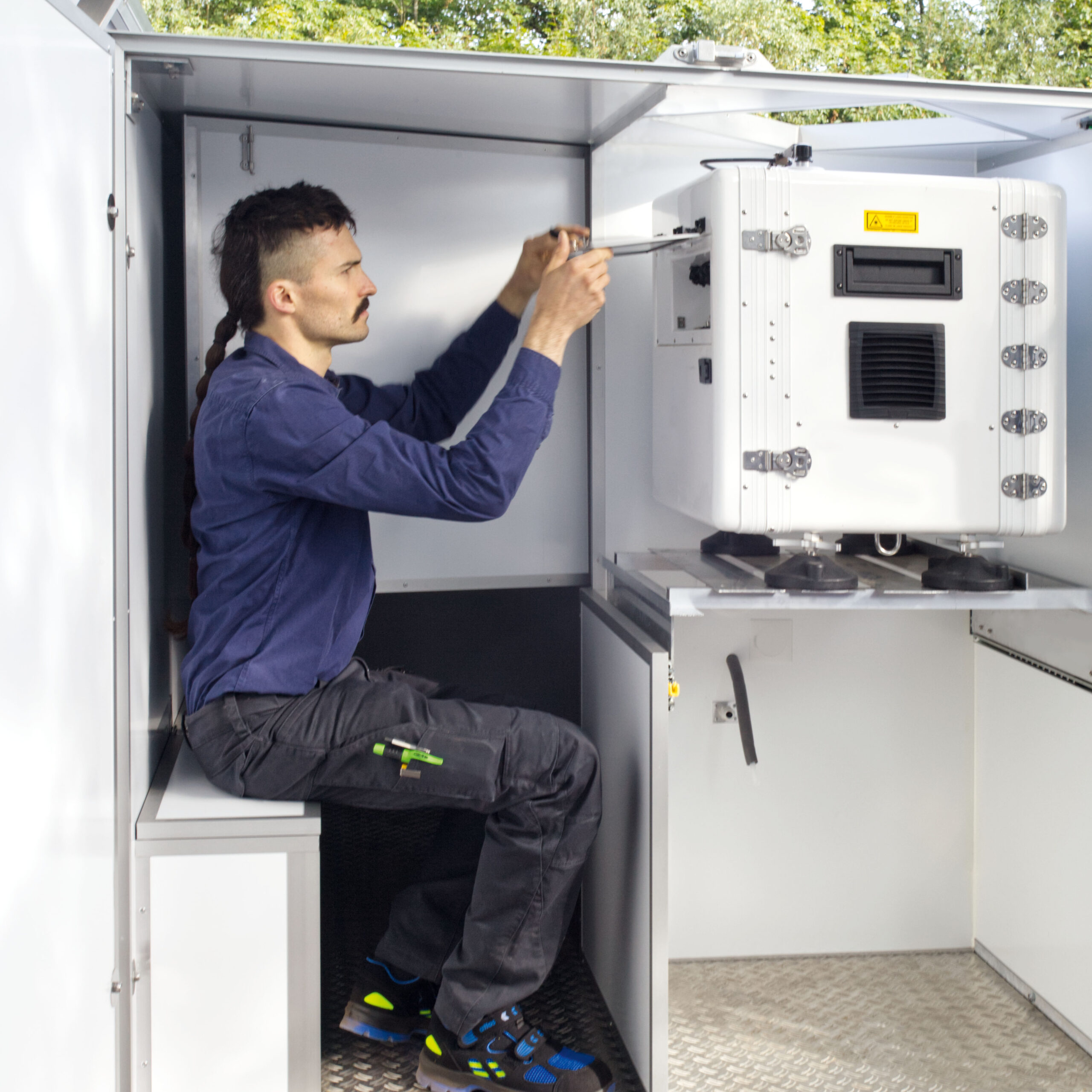
The Windcube is housed in its own wet room (“chimney”) on heavy-duty slides, which greatly simplifies handling during commissioning. Additionally, the chimney is accessible from the interior via a hatch. This allows you to work on the Windcube even while it is in the measurement position.
The design of our roof hatch, with its large size and 45° angled orientation, provides an additional safety margin in the event of heavy snow accumulation on the roof.
With the exception of the chimney, the container is insect-proof.
The power supply and electrical system are protected from insects (especially wasp nests) and small animals.
The power supply in the LIDAR-CON
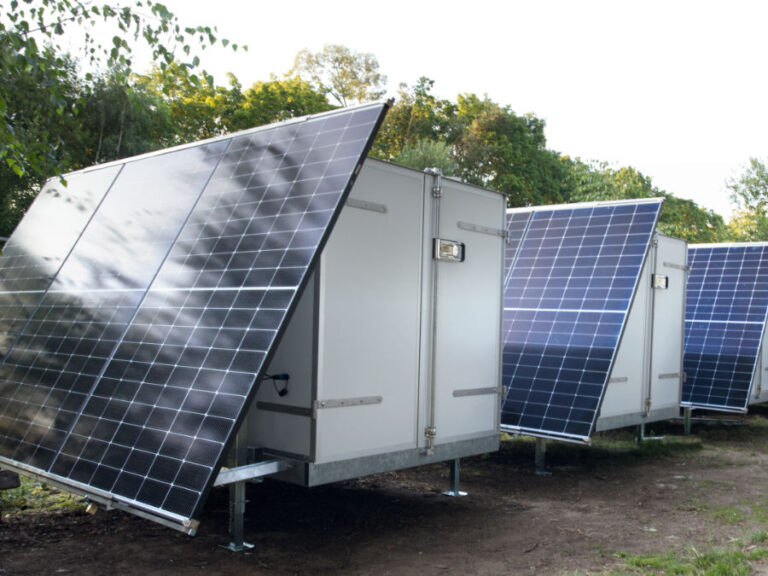
The power supply is designed with a substantial safety margin. A 1,425 Wp photovoltaic system powers a 24-volt, 400-Ah battery bank.
Should the solar output and battery capacity ever prove insufficient, an Efoy Pro 2800 fuel cell with 4 x 28 liters of fuel provides the necessary energy reserve.
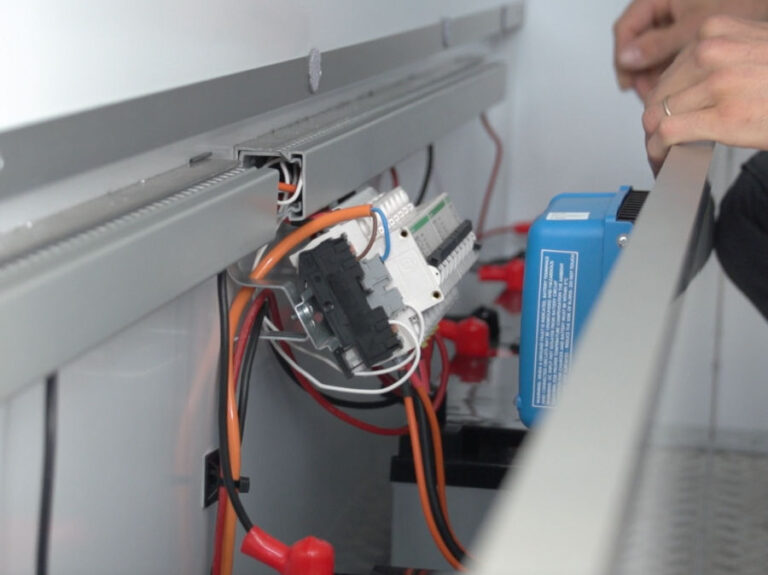
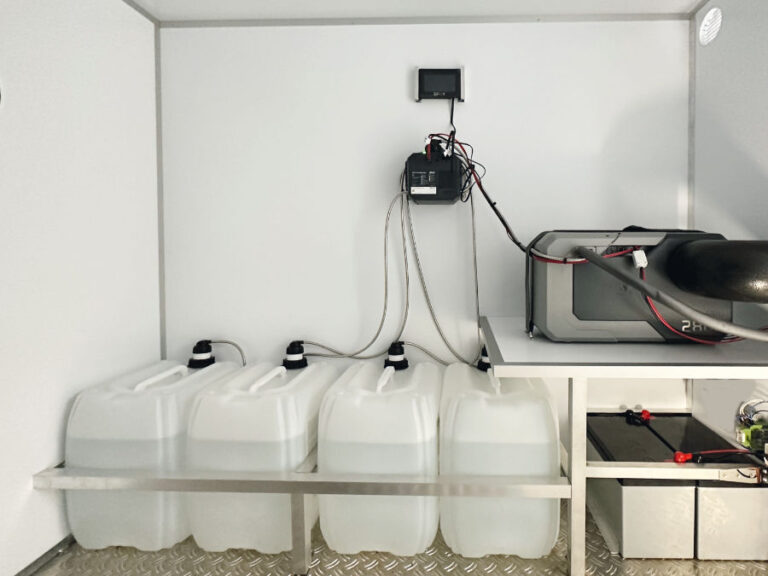
Transport and Setup
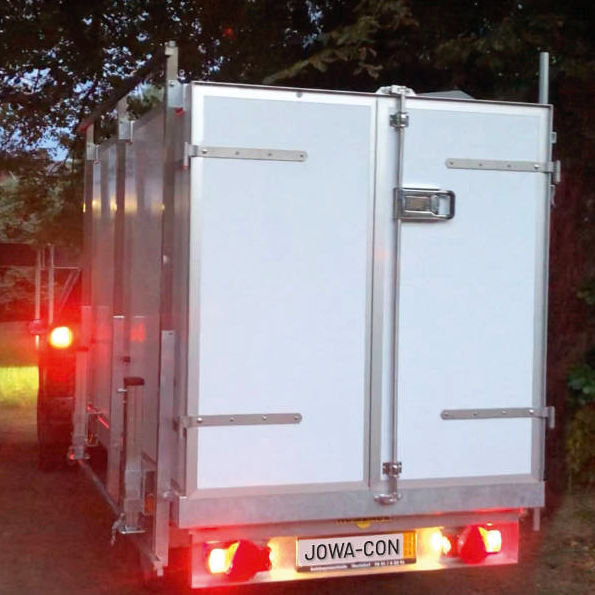
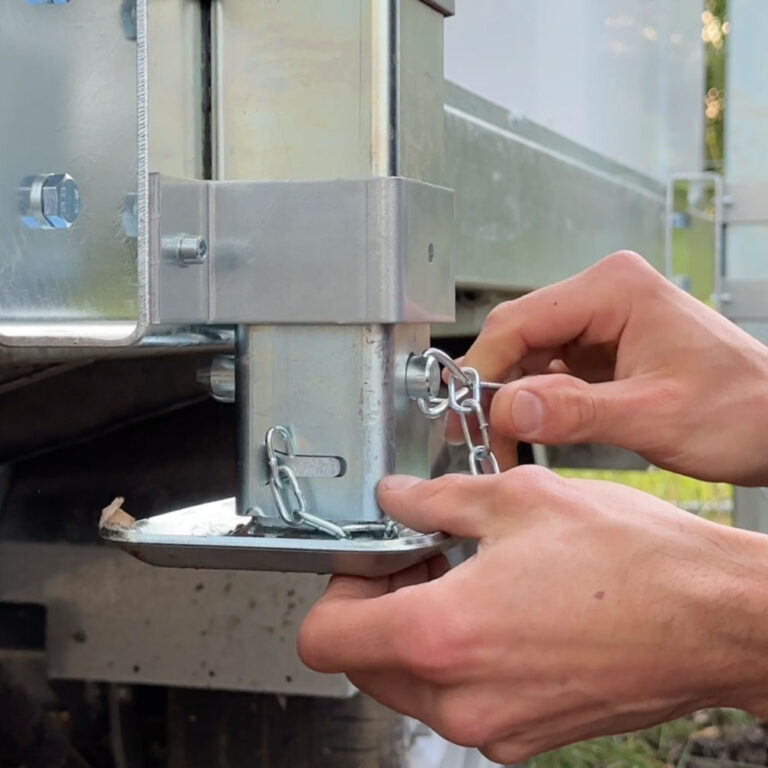
Transport and setup are incredibly simple and require virtually no tools:
- Park the trailer in the desired position
- Unfold the photovoltaic frames
- Extend the supports (using a cordless screwdriver)
- Move the trailer away
- Lower the container
- Slide the PV modules from the trailer into the frames and snap them into place
- Plug in your LIDAR and Power Up
Reliable measurements – summer and winter
The LIDAR-CON’s power supply is based on a combination of generously sized photovoltaic modules (1,425 Wp) and 24V/400Ah batteries, as well as a fuel cell that serves as an additional backup for prolonged periods of darkness during the winter.
The roof cutout of the LIDAR-CON is rotated by 45° and thus optimized for the LIDAR’s laser beams—ensuring that as much safety margin as possible remains even with heavy snow accumulation.
FAQ about LIDAR-CON
Lidars are typically outdoor measurement devices that do not require any special protection, just a stable power supply and water for cleaning.
However, a lidar operating on its own would be exposed to a high level of risk. The mere risk of losing data from a measurement period due to tampering or damage caused by humans or animals represents a significant economic risk.
A car trailer or a container that can be towed by a car, such as the LIDAR-CON—which features a self-contained power supply and a roof hatch designed to accommodate the LIDAR’s laser beams—provides the necessary protection against larger animals and minor acts of vandalism.
Transport, installation, and leveling are quick and easy; everything has its place, and the power supply—using photovoltaics, batteries, and a fuel cell—is very reliable. Especially when the measurement period spans several months, the LIDAR-CON has some clear advantages over the trailer-mounted unit.
Loading and unloading all JOWA-CON containers can be easily performed by a single person using a 19 mm wrench. This is done simply by extending the container’s retractable supports.
Once the supports are extended far enough, the trailer can be pushed under the container or moved away from underneath it.
If the container remains at a single location, it can be lowered to just a few centimeters above the ground.
The LIDAR-CON is specifically designed for wind measurement using lidar (a technique that measures the movement of particles in the air using a laser). The LIDAR-CON features a separate wet cell chimney with a skylight and a heavy-duty slide-out for the measuring device. The container’s materials and construction are designed to ensure it remains undamaged for many years with the skylight open (summer and winter alike) and that the area containing the electrical components and uninterruptible power supply stays dry.
When measuring wind, it is important to collect data reliably and without interruption over a period of at least 12 months.
Therefore, a reliable, uninterrupted power supply is particularly important.
The LIDAR-CON comes standard with 24V / 400 Ah batteries. These are charged by photovoltaic modules (1,425 Wp). For prolonged periods of bad weather, a fuel cell provides the necessary safety reserve.
Our energy management system is designed so that even if the fuel cell malfunctions in winter, there is still at least a 24-hour response time without interrupting the measurement. In the summer months, this time is significantly longer.
Both battery technologies have their advantages and disadvantages. Depending on the intended use, location, and duration, there are various factors related to cost-effectiveness and safety to consider.
We would be happy to advise you on this in a personal consultation.
The LIDAR-CON offers many advantages over the Lidar trailer, which are particularly valuable when measuring wind in forests:
- Can be set up even on complex terrain and slopes without additional equipment or preparatory work:
Forest floors are rarely level. With its support legs, the LIDAR-CON can easily compensate for elevation differences of up to 35 inches / 88 cm. This means that slopes, bumps, or uneven ground at the installation site are no problem. This eliminates the need for costly and time-consuming ground preparation. - “Last mile”:
Since the container can be set down on the trailer rotated by 90° or 180°, it is possible to optimally align the approach to the test site with the access routes, regardless of the direction. - Can be easily handled with a front loader:
For particularly hard-to-reach areas, the container can be easily transported the “last mile” using a tractor or front loader.
There is no drawbar, axle, light bar, wheels, or overrun brake, which makes transport significantly easier, especially in narrow logging roads. - Generously sized power supply:
In forest clearings, solar power output is reduced. Here, you benefit from our very generously sized power supply — both in terms of solar power output and battery capacity. - Maximize availability for wind measurement in forests with the LIDAR-CON:
Due to heavy shading, snow accumulation on roofs in forest clearings and along forest edges is often significantly greater and melts more slowly. The roof cutout on the LIDAR-CON is geometrically optimized so that measurements are still possible even when there is a very large amount of snow on the roof. - Maximum precision in forest wind measurement with the LIDAR-CON:
Not all LIDAR devices are 100% reliable for precise measurements in forests and complex terrain, as wind directions often differ at higher elevations and at ground level. We offer the LIDAR-CON, which is specifically optimized for the VAISALA WINDCUBE, to ensure precise wind measurements even in forested areas.
In the current version “v3,” LIDAR-CON is optimized for the following Doppler lidar devices: Vaisala Windcube (v2.0, v2.1, XP), Molas M300 (Movelaser) / Ammonit MeteoLaser, and Metek BEAM 6x / HALO Photonics Beam 6x.
The LIDAR-CON ZX is expected to be released in the second half of 2026; it will be the first to support operation of the ZX300 ZX-Lidar, offering all the benefits of the LIDAR-CON.
The LIDAR-CON ZX can be quickly converted from ZX-Lidar to Windcube, M300, MeteoLaser, Beam 6x, etc.
The communication and power supply systems are also designed to reliably power all available wind lidar instruments for at least 12 months.